
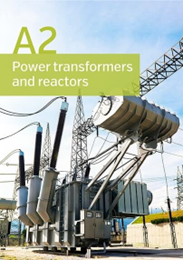
A2 Power transformers and reactors
Purpose
To facilitate and promote the progress of engineering and the international exchange of information and knowledge in the field of power transformers and reactors. To add value to this information and knowledge by means of synthesizing state-of-the-art practices and developing recommendations.
Within its technical field of activity, Study Committee A2 addresses topics throughout the asset management life-cycle phases; from conception, through research, development, design, production, deployment, operation, and end-of life. At all stages, technical, safety, economic, environmental and social aspects are addressed as well as interactions with, and integration into, the evolving power system and the environment. All aspects of performance, specification, testing and the application of testing techniques are within scope, with a specific focus on the impact of changing interactions and demands due to evolution of the power system. Life cycle assessment techniques, risk management techniques, education and training are also important aspects.
Within this framework, additional specific areas of attention include:
- Theory, principles and concepts, functionality, technological development, design, performance and application of materials and efficiency
- Manufacturing, quality assurance, application guidance, planning, routing and location, construction, erection and installation
- Reliability, availability, dependability, maintainability and maintenance, service, condition monitoring, diagnostics, restoration, repair, loading, upgrading and uprating
- Refurbishment, re-use/re-deployment, deterioration, dismantling and disposal.
Main areas of work
Study Committee A2 pursues two strategic directions based on the needs and requirements of their customers. The first addresses business and commercial considerations and concerns and is labelled “Services to Customers”, while the second is related to “Technology Issues”.
Services to Customers
Life management of transformers and reactors, including:
- Maintenance philosophies and practices
- Management of monitoring and diagnostic methods
- Management of transformer fleet ranking, development of health indexes
- Installation procedures, oil treatment, on-site drying, on-site testing
- Determination of remaining life
- Decisions to repair (on-site or in factory) or to scrap
- Failure codes and statistics
- Guide for failure investigations and post-mortem
- Oil preservation systems
- Types of oil available, use of inhibitors and additives, reclaiming of oil
- Alternatives to oil, such as esters
- Environmental aspects, especially audible noise
- Disposal of failed or redundant transformers, including component and materials
Consideration of economic issues, such as capital cost versus total costs of ownership, and models for cost evaluation.
Analysis of reliability and availability information on power transformers in service determined by surveys of equipment performance on an international basis with periodical up-dating of data.
Study of the impact of accessories on transformer reliability, such as bushings, tap-changers and cooling equipment.
Promotion and dissemination of Study Committee A2 work, in particular by the organization of workshops.
Technology Issues
Application of new materials, such as alternatives to oil (with Study Committee D1 participation), amorphous steel, new insulation materials, hybrid systems and Solid State Transformers.
Consideration of improving energy efficiency and lowering of the environmental impact of transformers and reactors.
Other areas of work include,
- FACTS and the application of power electronics
- Tap changers for phase-shifting transformers and Variable Shunt Reactors
- Integration of DER
- Digitalisation
- Superconducting transformers and current limiters
- Site assembled transformers
- Analysis of electric, magnetic and thermal fields and modelling and validation through benchmarking
- Electrical environment of transformers and service under different climatic conditions
- Interaction with the system
- Safety issues for transformers such as tank rupture, fire hazard and explosion of bushings